
Nestiko · Stage 1 · Identity
Colour and type system.
The palette and the type the brand holds to — named, paired, and tied to the surfaces you will actually make.
Why this first
A favourite blue and a free font are not a system.
Slides, the site, and the leave-behind then pick their own accents. The company looks like three vendors.
-
Colour with no role
Five swatches, and no one knows which is for the headline, the button, or the warning.
-
Type that fails in the room
A display face that looks sharp on a poster and unreadable on a laptop slide.
-
Licences nobody checked
A font grabbed for a deck that the company cannot legally ship on the site.
What you walk away with
A palette and a type pair the team can repeat.
Specific enough to drop into the brand kit, the deck, and the site without a fresh debate.
- Colour with jobs A short palette: what each colour is for, and what it must not be used as.
- Type that holds A pair for headlines and body, checked on a slide and on a screen.
- Use note Pairings, contrast, and the licence status the team needs before anything is published.
On this work
Palette and type with a job.
The same Nestiko desk that holds 250+ relationships. Colour and type are set so the next piece can repeat them.
- 0+
- Client relationships
- 0+
- Services, picked for your stage
- 1
- Palette and type pair for the brand to hold
- 15min
- Free 15-minute call to confirm fit
How it runs
Four moves. Read the mark, then set the system.
Colour and type follow the name and the mark, so they support the offer instead of decorating it.
-
Read the mark and the offer
What the company sells, who sees it first, and which surfaces are coming in the next month.
-
Set the palette
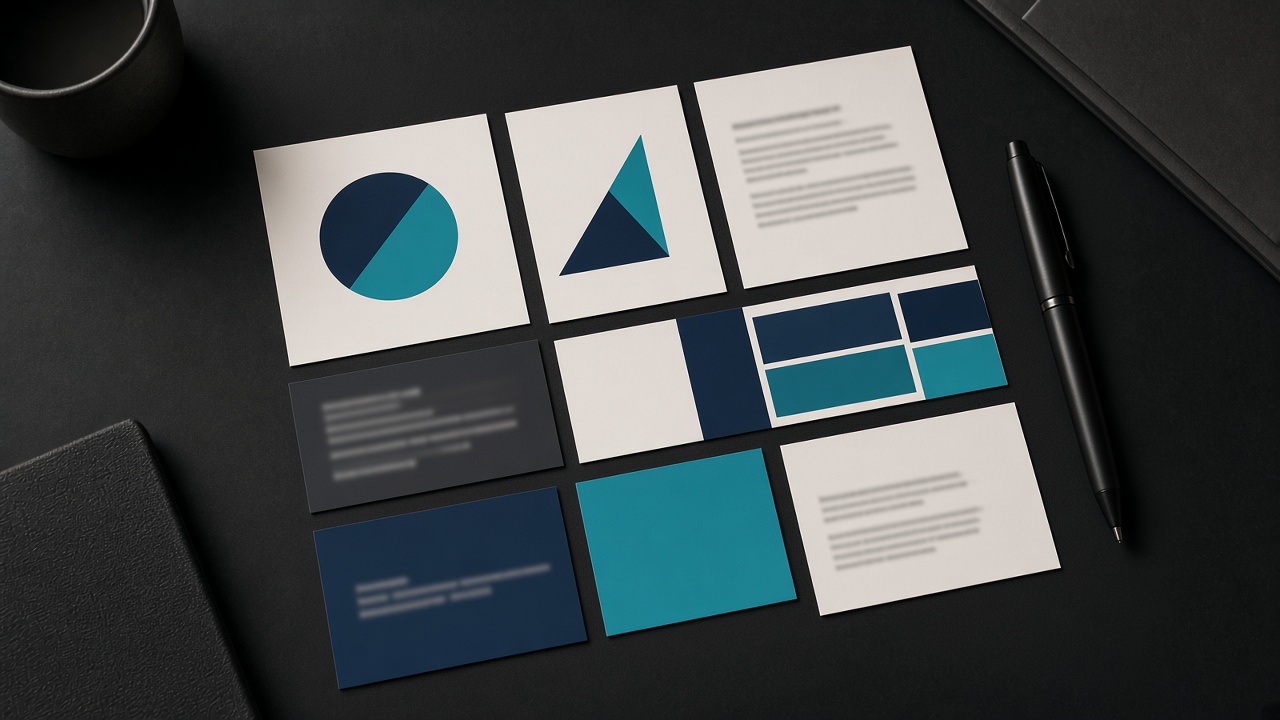
A small set of colours with roles — background, ink, accent — that survive print and screen.
-
Pair the type
Headline and body faces the team can license, with sizes that hold on a slide and a page.
-
Prove it on a piece
One real layout. If contrast or licence fails, the system is not handed over.
What’s inside
The work on the desk.
Palette and type as a system the next deck and the next page can share.
Colour
- Core swatches with roles
- Light and dark pairings
- Print-safe notes where cards are in scope
- What stays out of the palette
Type
- Headline and body pair
- Sizes for slide and screen
- Licence status, stated plainly
- Fallback if a face cannot ship on the web
Proof
- One sample layout
- Contrast check on text
- Note for the brand kit
- Open risks called out before issue
Who it is for
The mark exists. The colours still change every week.
If every new piece picks a fresh accent or a fresh font, this is the desk.
-
Identity has a direction
Name and mark are far enough along that colour and type will not be thrown out with them.
-
More than one surface is coming
A deck and a site, or a card and a page, need the same palette or they will diverge.
-
Before the kit is issued
Colour and type can be this desk, then folded into the brand kit the team opens.
FAQ
Questions before the call.
How many colours are in the system?
A short palette with jobs — usually background, ink, and one accent, plus the extras a real surface needs. A long swatch sheet with no roles is not the deliverable.
Will the typefaces be ones we can license?
Yes. We name the face, where it will be used, and whether it can ship on the web and in a deck. A font that only works on one designer’s machine does not make the system.
Is colour and type the same as a brand kit?
This desk is the palette and the type pair. The brand kit is the working set that also holds logo files and the rules of use. Companies often run colour and type inside the kit; book it alone when those two are the gap.
Do you check contrast, or only pick colours we like?
Both taste and use. Text has to hold on a slide and a screen. If a favourite colour fails as body ink, it stays an accent or it stays out.
How does this sit on the Starting Up path?
It is Stage 1 Identity, after the name and usually beside the mark. Deck, one-pager, and site concept then inherit the same colour and type instead of inventing their own.
What happens after the 15-minute call?
We confirm the mark and the first surfaces, and whether colour and type are the gap or whether the logo itself is still unset. You leave knowing the phase, or a better first desk.
How long does a colour and type system take?
One focused phase after the call: palette, pair, and a proof layout. We state the span before work starts. It stretches only if the mark is still moving.
How is pricing set for colour and type?
After the call we quote this phase — palette, type pair, licence notes, and one proof. The brand kit or the site build is priced as the next desk if you continue.
Is this remote, or only in Jaipur?
The desk is Jaipur-led. Screening and delivery run India-wide and remote. You do not need to be in the room to approve a palette.
Can you work with colours we already use?
Yes. We keep what already holds on the card or the site, give it a role, and retire the accents that fight it. The point is a system the team can repeat, not a fashionable replacement.
15-minute call
Book a 15-minute call.
Mobile, your name, and where colour and type are drifting. We come back with whether this system is the right desk.
Let’s begin with your mobile, so Nestiko can reach you for the free call.
- 15 minutes Fit check, not a sales pitch
- One team Colour and type system on one desk
- Jaipur-led India and remote delivery